What factors cannot be ignored in the selection of steel wire braided rubber hoses
Time:2022-08-11Page views:2055Steel wire braided rubber hose is an important link to ensure the normal operation of equipment such as automobiles, cranes, loaders, etc. When people purchase and choose hoses, they often only focus on their materials and ignore other factors related to the use of hoses. Below is an explanation for you.
1. Work pressure
When conveying materials, due to factors such as the flow rate of the material and the inner diameter of the hose, the hose must withstand a certain amount of pressure, which can be divided into positive pressure and negative pressure. So hoses are generally divided into low-pressure hoses and high-pressure hoses. The rated working pressure of the hose we choose must be greater than the actual working pressure during use, because once the pressure exceeds the working pressure of the hose, it will cause damage to the hose, which may lead to hose rupture, breakage, or even serious breakage accidents.
2. Appearance
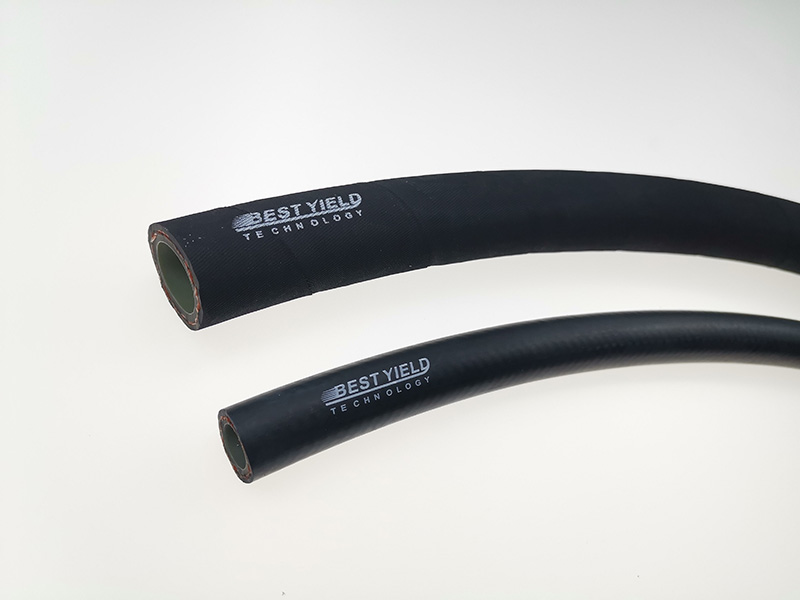
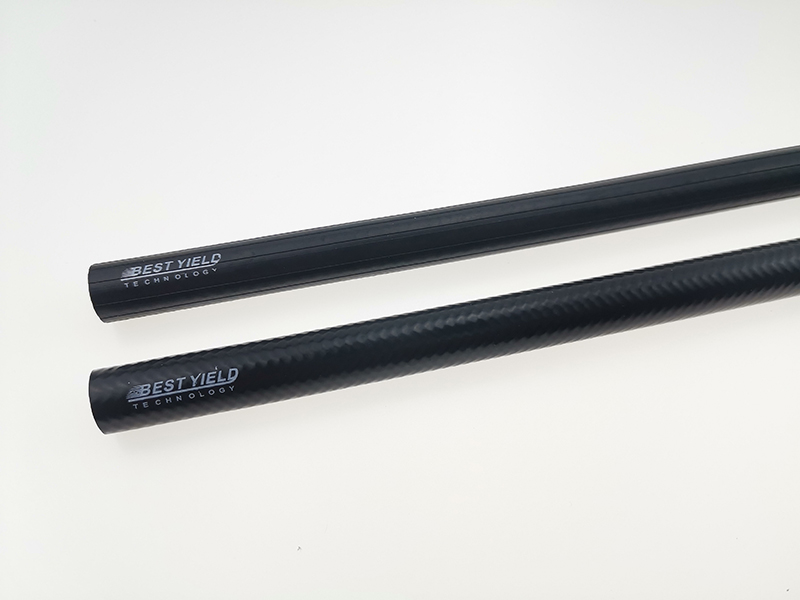
The shape of steel wire braided rubber hose is generally straight, and other shapes are collectively referred to as irregular tubes. A straight pipe is a pipe with no curvature and no significant change in inner diameter. Irregular pipes refer to rubber hoses other than straight pipes, such as variable diameter pipes with changes in inner diameter, flat curved pipes, and partially three-dimensional curved pipes. When using, it is necessary to choose a rubber hose with a suitable shape, otherwise if the hose is forcibly bent, the wall of the hose may be damaged, and the pressure of each part of the hose will also change, resulting in the working pressure exceeding the preset range.
3. Length
As for the length, some people think that the length of the steel wire braided rubber hose does not affect it. But in reality, this is a wrong idea. Long rubber hoses may bend during use. Even if the bend is something that the hose can withstand, there will still be a certain degree of increase in pressure at the bend of the pipe when conveying materials. So the working pressure that the hose can withstand in its normal form may not be able to withstand when bent.