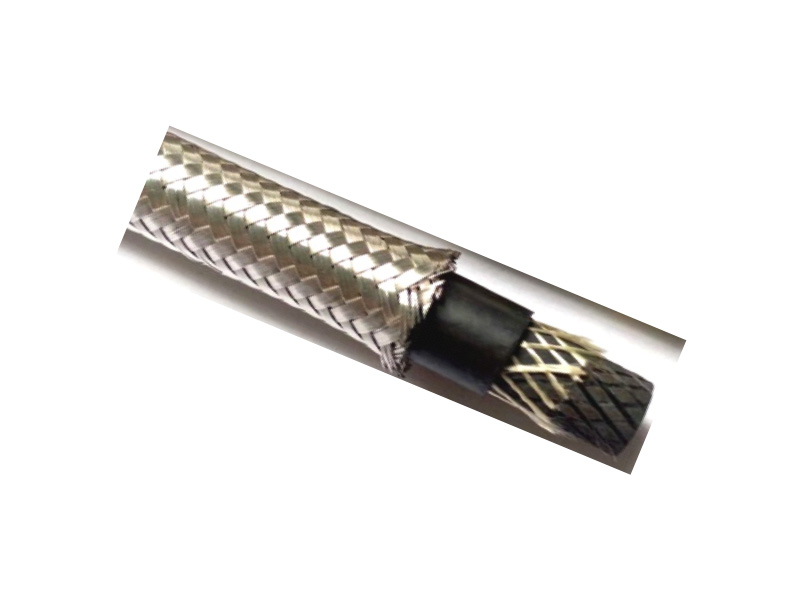
The influence of usage conditions on the service life of high-pressure steel wire braided rubber hoses
Time:2022-05-13Page views:2563The service life of high-pressure steel wire braided rubber hoses depends on their usage conditions. Regularly inspect the pipe components for leaks, kinks, bubbles, wear, scratches, or other damages during use. When components are found to be damaged or worn, they must be replaced immediately. The inner adhesive layer comes into direct contact with the liquid and is required to be free from fluid corrosion and leakage under long-term working conditions.
The high-pressure steel wire braided rubber hose can withstand a certain amount of pressure under the action of the reinforcement layer, so nitrile rubber should be used. Apart from the adhesive material, the main factors affecting performance are the hardness, thickness, and permanent deformation of the inner adhesive layer. Hardness and permanent deformation have a significant impact on sealing performance. Generally, the higher the hardness, the smaller the permanent deformation after compression, and the better the sealing performance. It is generally recommended to have a Shore hardness of 70-85 and a compression set of 50%.
The thickness of the inner adhesive layer is 1.5~2.5 mm. If it is too thick, it will increase the flow rate during interception, resulting in excess adhesive accumulation at the contact end face between the joint core sleeve and the rubber hose, reducing the overcurrent section; If it is too thin, it will break when bent. Meanwhile, the uniformity of the wall thickness of the inner adhesive layer is also important. If the thickness is uneven, one side will crack and the other side will accumulate glue after being compressed.
The pitting on the surface of the inner rubber layer is also an important factor affecting performance and quality, and corrosion of hydraulic hoses often leads to external leakage. The corrosion of the inner adhesive layer is usually caused by concentrated high-speed fluids or small particles in the fluid.
To avoid corrosion of the inner rubber layer, the appropriate size of high-pressure steel wire braided rubber hose should be determined based on the recommended high flow rate. In addition, it should be ensured that the hose components do not bend excessively and that the fluid medium does not cause excessive wear on the inner rubber layer of the hose. It is very important to comply with the requirements for large bending radius and diameter specified in each hose engineering specification during the hose assembly process.