
Malfunctions in various components of high-pressure steel wire braided rubber hoses
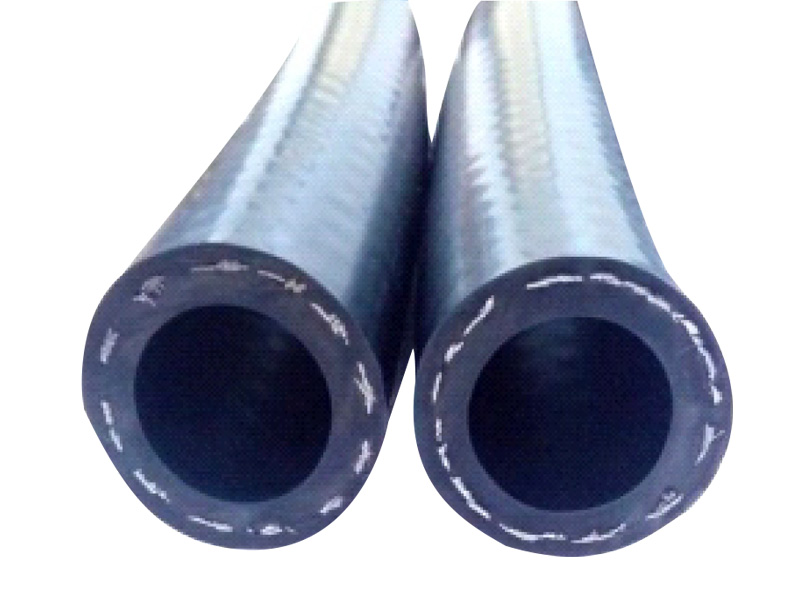
Time:2024-03-25Page views:1349High pressure steel wire braided rubber hose is an important component of the hydraulic system of construction machinery. It is generally composed of four parts: outer rubber layer, steel wire reinforcement layer, middle rubber layer, and inner rubber layer. The inner rubber layer is in direct contact with the liquid and is generally made of synthetic rubber. The load-bearing capacity depends on the steel wire reinforcement layer. Below are the situations where each component of the hose fails.
1、 External adhesive layer failure
1. Surface cracks: In cold environments, surface cracks can cause the hose to bend. If cracks appear on the outer side of the pipe, attention should be paid to whether there are cracks in the internal rubber, and it should be decided whether to replace it immediately. Therefore, do not move or repair hydraulic systems in cold environments. If you need to work in a cold environment for a long time, you need to replace the cold resistant rubber hose.
2. Surface blistering: Surface blistering is caused by poor quality or improper use. If bubbles appear in the middle of the hose, it is mostly due to production quality issues, and a qualified hose should be replaced in a timely manner; If bubbles appear at the joint, it is likely due to improper installation of the joint.
3. Rubber hose not ruptured but leaking a large amount of oil: If the pipe body is not ruptured but leaks a large amount of oil, the reason is that the inner rubber layer is corroded and scratched until the steel wire layer leaks out extensively, causing a large amount of oil leakage. This type of malfunction usually occurs at the bend of the pipeline. Check and replace the high-pressure steel wire braided rubber hose to ensure that the bending radius meets the technical requirements for use.
4. The outer layer is severely deteriorated and the surface is slightly cracked: this is a manifestation of natural aging after prolonged use. Due to aging and deterioration, the outer layer continuously oxidizes and the surface becomes brittle. As time goes by, the brittle layer deepens, and small cracks will appear as long as it is slightly bent during use. In this case, the rubber hose should be replaced.
2、 Strengthening layer failure
1. The rusting of the braided steel wire near the fracture site is mainly due to the moisture or corrosive substances in the outer layer, which weaken the strength and cause it to rupture under high pressure. This situation is usually accompanied by damage, scratches, or severe deterioration of the outer layer, resulting in the outer layer losing its protective effect on the reinforcement layer. At this time, it is necessary to check and eliminate adverse factors such as mechanical damage, chemical corrosion, and high-temperature baking of the outer rubber layer, and then replace the rubber hose. But there are also cases where the outer adhesive layer is intact but the reinforcement layer cracks, usually within 200 millimeters of the hose joint. Most of the reason is that the connectors are not qualified. When moisture enters the inner edge of the sheath, the reinforcing material will absorb the moisture, causing rust and resulting in the high-pressure steel wire braided hose losing its pressure strength and breaking.
2. The reinforcement layer at the fracture site does not rust, but irregular wire breakage occurs: If the hose breaks, peel off the outer rubber layer and check that the reinforcement layer is not rusted, but irregular wire breakage occurs in the length direction of the reinforcement layer, mainly due to high-frequency impact force. There are many intersections between the steel wires in the reinforcement layer. When there is a significant change in pressure inside the pipe, these intersections will also move with the change in pipe diameter, causing the steel wires to rub against each other. If the hose is subjected to high-frequency impact pressure, frequent friction will occur at the intersection, leading to wire breakage.
3、 Internal adhesive layer failure
1. The internal rubber layer of the hose is hard and cracked: Rubber products become flexible and pliable by adding plasticizers. When operated under high temperature and pressure, the plasticizers may overflow due to overheating. In addition, when overheated liquid passes through cylinders, valves, or other components in the system, if there is a significant pressure drop, the oil will decompose, causing the rubber layer inside the pipe to oxidize and harden. In this situation, it is necessary to check whether the working temperature of the hydraulic system is normal, whether the throttle valve of the valve and the suction channel of the pump are unobstructed, and eliminate factors that may cause high temperature before replacing the hose. If only the inner rubber below the rupture site hardens while the upper part remains in good condition, it indicates that excessive compression, bending, or twisting at the rupture site will cause heating and accelerate oxidation, leading to the rupture of the inner rubber and the hardening of the rubber.
2. Serious deterioration and significant expansion of the internal rubber layer: The reason for the serious deterioration and significant expansion of the rubber layer inside the hose is that the hydraulic oil has been used for a long time or there is oxidized dirt inside the hydraulic oil, which will cause the hose to deteriorate due to chemical reactions. When encountering this phenomenon, the physical and chemical indicators of the hydraulic oil should be checked, the compatibility between the system fluid and the internal rubber material should be checked, and whether the working temperature meets the standards.
4、 Cracking fault
1. One or more cracks, neat cracks: The main reason for this phenomenon is that the system pressure is too high, exceeding the pressure resistance of the hose. If the system pressure meets the requirements, check whether the actual pressure resistance performance meets the design requirements.
2. Twisting at the fracture site: This phenomenon is caused by excessive twisting during installation or use. After twisting the hose, the structure of the reinforcement layer changes, and the gap between the braided steel wire and the wrapped steel wire increases, reducing the compressive strength and making the hose prone to fracture under high pressure.
3. The steel wire at the rupture site curls and shows obvious necking phenomenon: the reason for this phenomenon is that the rubber hose is excessively stretched and deformed, delaminated, and the compressive strength is reduced. Under high pressure, the rubber hose shrinks or elongates longitudinally, and the elongation is generally 2% to 4% of the normal state. If the rubber hose is too short during installation, it will be subjected to significant stretching during operation, and in severe cases, it may break or loosen. If the span is too large, the weight of the pipe and the liquid will also bring significant tensile force. Therefore, appropriate solutions need to be taken based on the specific situation.
The above is an analysis of the faults in each component of the high-pressure steel wire braided rubber hose. If the hose is installed on a critical component, it is recommended to regularly inspect or replace it.