Analysis of High Pressure Characteristics of High Pressure Steel Wire Braided Rubber Hose
Time:2025-06-27Page views:490High pressure steel wire braided rubber hose, as a key component widely used in industries, engineering machinery, hydraulic systems, and other fields, its high-pressure characteristics directly determine the performance and service life of the hose. The high-pressure characteristics of high-pressure steel wire braided rubber hoses do not exist in isolation, but are closely related to the structural design, material selection, manufacturing process, and practical application scenarios of the hoses. Understanding the high-pressure characteristics of high-pressure steel wire braided rubber hoses requires analysis from multiple dimensions, including the pressure bearing capacity of the hose, matching of system pressure, determination of working pressure, and precautions in practical applications.
1、 Structure and High Voltage Characteristics
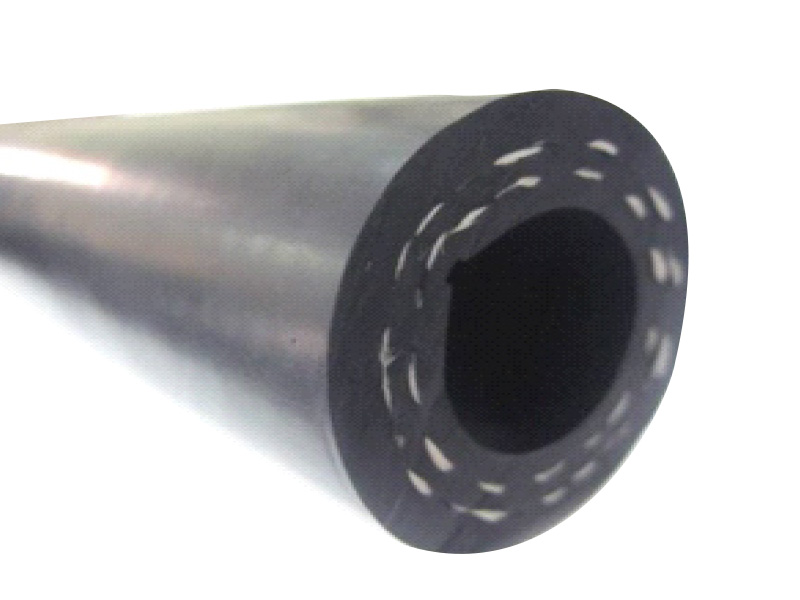
The core structure of high-pressure steel wire braided rubber hose is usually composed of an inner rubber layer, a reinforcement layer, and an outer rubber layer. Among them, the reinforcement layer is a key component that determines the high-pressure characteristics of the rubber hose. The reinforcement layer is usually made of high-strength steel wire weaving or winding, and this structural design can effectively disperse and withstand internal fluid pressure, preventing the hose from expanding or breaking under high pressure. The weaving density, number of layers, and material of the steel wire directly affect the pressure bearing capacity of the rubber hose. For example, multi-layer steel wire braided rubber hoses usually have higher pressure resistance than single-layer braided rubber hoses and can withstand greater system pressure.
The function of the inner adhesive layer is to prevent fluid leakage and protect the reinforcement layer from corrosion or wear. The material of the inner rubber layer usually needs to have good oil resistance, chemical corrosion resistance, and wear resistance to ensure the long-term stability of the hose in high-pressure environments. The outer adhesive layer is mainly used to protect the reinforcement layer from external environmental damage, such as mechanical wear, ultraviolet radiation, or chemical corrosion. The material of the outer adhesive layer usually needs to have a certain degree of flexibility and weather resistance.
2、 The relationship between system pressure and hose working pressure
The working pressure of high-pressure steel wire braided rubber hose is not arbitrarily determined, but needs to be selected according to the actual pressure requirements of the system. System pressure refers to the working pressure of the fluid in a hydraulic system or fluid delivery system, while the working pressure of a hose is the maximum pressure that the hose can safely withstand. In practical applications, the working pressure of the hose needs to be greater than or equal to the maximum working pressure of the system to ensure that the hose will not rupture or leak in high-pressure environments.
When determining the working pressure of the hose, the following factors need to be considered:
1. Maximum working pressure of the system: This is the basis for selecting the working pressure of the hose. The rated working pressure of the hose needs to be able to cover the maximum working pressure of the system, while also considering the impact of pressure fluctuations or peak pressures on the hose.
2. Safety factor: In order to ensure the safe use of rubber hoses, a certain safety factor is usually added to the maximum working pressure of the system. For example, if the maximum working pressure of the system is 20MPa, the rated working pressure of the hose may need to be selected as 25MPa or higher to cope with possible pressure fluctuations or emergencies.
3. Working environment: The working environment of rubber hoses can also affect their pressure bearing capacity. For example, high temperature environments may lead to a decrease in the performance of rubber hose materials, thereby reducing their actual pressure bearing capacity. Therefore, hoses used in high temperature or extreme environments need to choose higher working pressure levels.
3、 Pressure level and selection
The pressure rating of high-pressure steel wire braided rubber hoses is usually divided according to the structure and material of their reinforcement layer. Common pressure ratings include low pressure, medium pressure, high pressure, and ultra-high pressure. Rubber hoses with different pressure ratings are suitable for different application scenarios. For example:
1. Low pressure rubber hose: usually used in hydraulic systems or fluid delivery systems with low pressure, its working pressure is generally below 10MPa.
2. Medium pressure rubber hose: suitable for medium pressure systems, with a working pressure typically between 10-20MPa.
3. High pressure rubber hose: mainly used in high-pressure hydraulic systems or engineering machinery, with a working pressure usually between 20-40MPa.
4. Ultra high pressure rubber hose: suitable for high-pressure environments, such as oil extraction or high-pressure testing equipment, with a working pressure of up to 40MPa or more.
When choosing high-pressure steel wire braided rubber hoses, in addition to considering the working pressure, it is also necessary to pay attention to the burst pressure of the hose. Burst pressure refers to the maximum pressure that a rubber hose can withstand under harsh conditions, usually 2-4 times the working pressure. Burst pressure is an important indicator for measuring the safety performance of rubber hoses, and selecting hoses with higher burst pressure can further improve the safety of the system.
4、 Precautions in practical applications
In practical use, the high-pressure steel wire braided rubber hose needs to pay attention to the following points to ensure the full play of its high-pressure characteristics and long-term stability:
1. Correct installation: The installation method of the hose directly affects its pressure bearing performance. During installation, excessive bending or twisting of the hose should be avoided to prevent local stress concentration and damage to the hose. At the same time, the joint part of the hose needs to ensure sealing to prevent high-pressure fluid leakage.
2. Regular inspection: High pressure rubber hoses will gradually age or wear out during use. Regularly inspecting the appearance, joints, and reinforcement layer of the hose can detect potential problems in a timely manner and avoid sudden failures in high-pressure environments.
3. Avoid overpressure use: Although high-pressure hoses have a certain safety factor, long-term overpressure use will accelerate the aging and damage of the hoses. Therefore, in practical applications, it is necessary to strictly avoid the system pressure exceeding the rated working pressure of the hose.
4. Environmental adaptability: Rubber hoses made of different materials have different adaptability to the environment. For example, rubber hoses used in high temperature or corrosive environments need to be made of materials that are resistant to high temperatures or corrosion to ensure their long-term stability in high-pressure environments.
The high-pressure characteristics of high-pressure steel wire braided rubber hoses are one of their core properties, directly related to the application scope and service life of the hoses. By selecting the working pressure of the hose reasonably, installing and maintaining it correctly, the performance of high-pressure steel wire braided hose can be fully utilized to meet the high-pressure needs of different industrial fields. In practical applications, only by considering factors such as system pressure, safety factor, and working environment can we ensure safe, efficient, and long-term stable operation.