
Basic processing requirements for braided rubber hoses
Time:2025-06-19Page views:399As a commonly used pipe for transporting liquids and gases, the processing of internally woven rubber hoses requires strict adherence to a series of requirements to ensure product quality and performance. The following is a detailed explanation of the processing requirements for internally woven rubber hoses.
In terms of material selection, the raw materials for the inner braided rubber hose need to meet specific performance requirements. The inner rubber layer is usually made of rubber materials with high elasticity, wear resistance, and corrosion resistance to ensure good sealing and durability when conveying media. The weaving layer uses high-strength and high modulus fibers or steel wires to enhance the mechanical strength and pressure resistance of the pipe wall. The outer rubber layer is made of rubber material that is compatible with the inner rubber layer to provide additional protection and wear resistance. All materials must comply with relevant national or industry standards and be accompanied by quality inspection certificates to ensure their quality and safety.
In the mixing process, it is necessary to evenly mix the rubber base material with various additives such as plasticizers, vulcanizing agents, anti-aging agents, etc. This step is crucial for ensuring the uniformity of material properties. During the mixing process, it is necessary to strictly control the temperature, time, and mixing ratio to obtain the ideal rubber mixture.
Extrusion molding is the step of extruding the mixed rubber material through an extruder. In this step, it is necessary to ensure accurate control of parameters such as temperature, pressure, and speed of the extruder to obtain an inner rubber tube with uniform wall thickness and smooth surface. The extruded inner rubber tube needs to be cooled and shaped to ensure its dimensional stability and shape accuracy.
Weaving reinforcement is one of the key steps in the processing of inner braided rubber hoses. During the weaving process, it is necessary to ensure that the tension of the braided wire is uniform and consistent to prevent defects such as uneven tension or wrinkling in the braided layer. At the same time, the material, specifications, and weaving density of the braided wire also need to be selected according to specific application scenarios to meet different strength and pressure resistance requirements. During the weaving process, it is also necessary to pay attention to the protection of the inner rubber tube to avoid damage from the weaving thread.
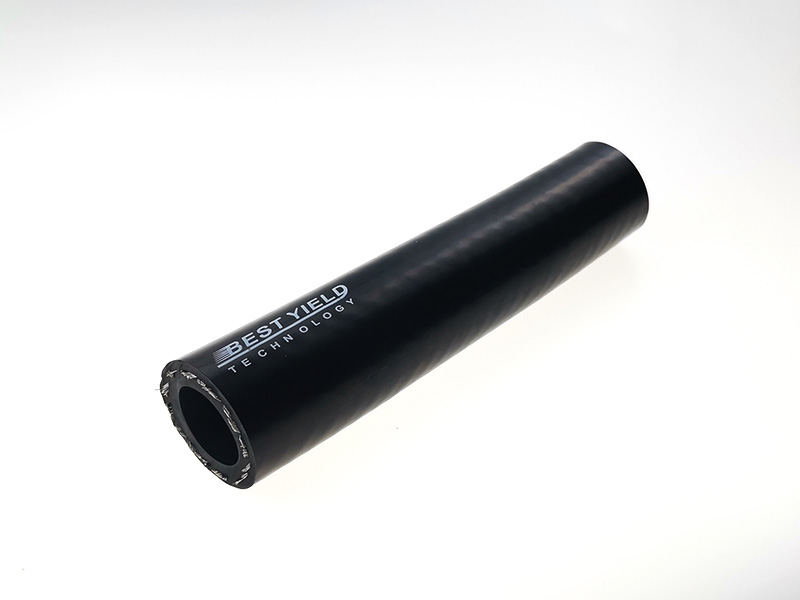
Sulfurization is the process of high-temperature treatment of extruded and woven inner braided rubber hoses to form a stable mesh structure, thereby enhancing their physical and chemical properties. During the vulcanization process, it is necessary to strictly control parameters such as temperature, time, and the amount of vulcanizing agent to ensure the vulcanization effect. The vulcanized inner braided rubber hose needs to be cooled and inspected to ensure its quality meets relevant standards.
In addition to the basic processing requirements mentioned above, the processing of inner braided rubber hoses also needs to pay attention to the following points:
Firstly, multiple quality control points need to be set up during the processing to conduct strict quality inspections on raw materials, semi-finished products, and finished products. This includes sensory evaluation, physical and chemical testing, and transfer testing to ensure that the product meets relevant standards and quality requirements. At the same time, it is necessary to monitor and record key parameters in the production process in real time in order to discover and solve problems in a timely manner.
Secondly, attention should be paid to safety production and environmental protection during the processing. During the rubber processing, harmful gases and dust may be generated, therefore effective ventilation and dust removal measures need to be taken. At the same time, it is necessary to dispose of waste in a reasonable manner to reduce environmental pollution.
In addition, in order to meet the needs and application scenarios of different customers, the processing of woven rubber hoses also needs to have corresponding flexibility and customization capabilities. This includes selecting appropriate materials, specifications, and weaving methods based on the specific requirements of the customer, as well as providing necessary technical support and after-sales service.
In the actual processing process, it is also necessary to pay attention to the following details:
One is the choice of weaving thread. The material, specifications, and weaving density of the braided wire need to be selected according to specific application scenarios. For example, for high-pressure large-diameter rubber hoses, it is necessary to choose braided wires with higher strength and higher weaving density. At the same time, attention should be paid to the compatibility between the braided wire and the inner and outer adhesive layers to avoid defects such as delamination or detachment.
The second is the control of vulcanization process. During the vulcanization process, it is necessary to strictly control parameters such as temperature, time, and the amount of vulcanizing agent used. Excessive temperature or prolonged time may lead to excessive vulcanization of rubber, resulting in hardening and brittleness; If the temperature is too low or the time is too short, it may lead to insufficient vulcanization and reduce the performance of the product. Therefore, accurate process control is required based on the specific rubber formula and type of vulcanizing agent.
The third is the maintenance and upkeep of processing equipment. The quality and performance of processing equipment directly affect the quality and production efficiency of products. Therefore, it is necessary to regularly maintain and upkeep the equipment, including cleaning, lubricating, adjusting, and replacing vulnerable parts. At the same time, it is necessary to conduct regular inspections and tests on the equipment to ensure its normal operation and compliance with relevant standards.
The fourth is the control of the production environment. The production environment also has a significant impact on the processing quality of internally woven rubber hoses. It is necessary to maintain a clean and dry production environment to avoid the impact of dust, moisture, and other pollutants on product quality. At the same time, it is necessary to control parameters such as temperature and humidity in the production environment to meet the requirements of different materials and processes.
The processing of internally woven rubber hoses requires strict adherence to a series of requirements, including material selection, mixing process, extrusion molding, weaving reinforcement, and vulcanization steps. At the same time, attention should also be paid to issues such as quality control, safety production, and environmental protection. By continuously optimizing processing technology and improving production management level, high-quality and high-performance braided rubber hose products can be produced to meet the needs and application scenarios of different customers.