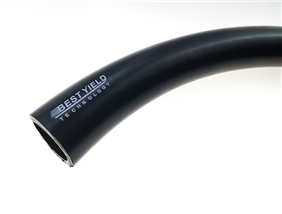
Selection inspection and cracking reasons of rubber pipes
Time:2023-01-10Page views:3299When it comes to cost-effectiveness, everyone thinks that the higher the cost-effectiveness, the better. There are many rubber tube manufacturers on the market now, and their production processes are also different, resulting in many price differences. In the past, most customers would pay attention to price advantages. But with the development of the times, more and more people are paying attention to the quality and cost-effectiveness of rubber hoses. Some rubber hoses may be cheap, but their raw materials may contain various recycled rubbers. These recycled rubbers are cheap, but they will reduce the durability of the hose.
1. Correct use
In the selection of rubber hoses, it is necessary to first clarify the working pressure and suction value, and also understand the pressure fluctuations or peak values during operation. Exceeding the allowable value will shorten the life of the hose. When selecting, the required length of the hose should be determined first, and then the usage conditions of the hose should be checked to ensure that it meets the requirements of the selected hose and obtains a suitable pipeline.
2. Correct installation
If the bending radius of the installed rubber hose is smaller than the specified value, the service life will be greatly shortened. Therefore, it is necessary to consult information about the usage method, especially about the bending radius, before installation.
3. Maintenance during use
① It is recommended to empty the hose after use. ② After each use, it should be checked to ensure that there is no structural damage. ③ If subjected to severe pressure during use or if the outer layer comes into prolonged contact with the transported liquid, it is recommended to conduct a hydrostatic test.
The rubber tube may crack after use, and the braided steel wire near the fracture may rust. Peel off the outer adhesive layer for inspection, and the braided steel wire near the fracture is rusted. This situation is due to the weakening of the strength of the hose by moisture or corrosive substances, resulting in fracture when subjected to high pressure. In addition, the reinforcement layer is not rusted, but there are irregular broken wires in the reinforcement layer. This is mainly due to the high-frequency impact force, and sometimes one or more cracks may appear, which are neat while other parts remain intact. The main reason for this phenomenon is that the system pressure is too high, exceeding the pressure resistance capacity of the hose, but twisting occurs at the fracture point, mainly due to excessive twisting of the hose during installation or use.