
Under what circumstances should steel wire braided rubber hoses be replaced preventively
Time:2024-12-31Page views:878In the current hydraulic system, the steel wire braided rubber hose is a key component for transmitting hydraulic oil and other fluids, and its stability and durability directly affect the safety and reliability of the entire hydraulic system.Steel wire braided rubber hoseWith its high pressure resistance, wear resistance, flexibility, and corrosion resistance, it plays an important role in high-pressure and heavy-duty applications. However, with the passage of time, these rubber hoses will gradually age due to various factors, resulting in a series of problems. If these problems are not dealt with in a timely manner, they will pose a serious threat to the safety and reliability of the hydraulic system.
1. Cracks or fissures appear on the surface of the rubber hose
In cold environments, cracks are prone to form on the surface of rubber hoses, which is a manifestation of material low-temperature brittleness. In addition, due to long-term exposure to high pressure, vibration, or chemical corrosion, cracks or small cracks may also appear on the surface of the rubber hose. These cracks not only affect the sealing performance of the hose, but may also cause hydraulic oil leakage, further exacerbating pressure fluctuations and energy loss in the system. Once obvious cracks or fissures are found on the surface of the hose, it should be replaced immediately to avoid safety accidents caused by leakage.
2. Bubbling or peeling of rubber hoses
Bubbles on the surface of rubber hoses are usually caused by quality issues or improper use during the production process. Bubbles may occur in the middle of the hose, which is often related to the raw materials or production process; It may also occur at the joint, which may be due to improper installation or poor sealing of the joint. The bubbling phenomenon indicates that the inside of the hose has been damaged and can no longer withstand normal working pressure. Peeling refers to the gradual detachment of the rubber material on the outer layer of the hose, exposing the woven layer inside. This situation is often caused by aging, wear, or chemical corrosion. Whether it is bubbling or peeling, it is a direct manifestation of the decreased performance of the hose, and it should be replaced in a timely manner to avoid system failure.
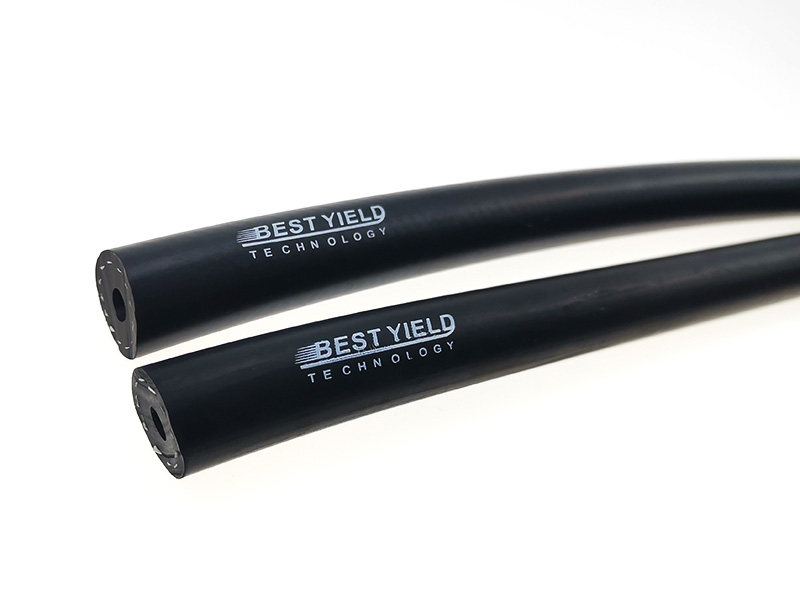
3. The rubber layer inside the hose has deteriorated
In hydraulic systems, high temperature, high pressure, and corrosive media can cause the rubber layer inside the hose to deteriorate. The deteriorated rubber layer may become harder, brittle, or expand, thereby losing its original elasticity and sealing performance. This deterioration phenomenon usually occurs after the rubber hose has been used for a long time, especially in harsh working environments. If serious deterioration of the rubber layer inside the hose is found, it should be replaced immediately to avoid system failure caused by poor sealing.
4. Decreased voltage resistance
The pressure resistance of steel wire braided rubber hose is one of its core performance indicators. As the usage time increases and the working environment changes, the pressure resistance of the hose will gradually decrease. This may be caused by fatigue, fracture of the internal steel wire weaving layer, or wear and aging of the rubber layer. When it is found through professional testing that the pressure resistance of the hose cannot meet the working requirements of the system, it should be replaced in a timely manner to avoid hose rupture and system failure caused by overpressure.
5. Excessive bending or twisting
In hydraulic systems, rubber hoses often need to withstand various complex bends and twists. However, excessive bending or twisting can alter the pressure distribution and stress state inside the hose, leading to delamination or fracture between the braided layer and the rubber layer. In this case, even if the appearance of the hose appears intact, its interior may have been severely damaged. Therefore, during installation and use, excessive bending or twisting of the hose should be avoided as much as possible to ensure that its bending radius meets the design requirements. If the hose is found to be damaged due to excessive bending or twisting, it should be replaced promptly to avoid safety hazards.
6. Aging and fatigue
The service life of steel wire braided rubber hoses is related to factors such as material, production process, usage environment, and maintenance. As the service life increases, the steel wire braided layer and rubber layer inside the hose will age and fatigue. Aging rubber hoses can become fragile and brittle, while fatigued steel wire braided layers may break or loosen. In this case, the strength and toughness of the hose will significantly decrease, and it will no longer be able to withstand normal working pressure and workload. Therefore, when the service life of the hose reaches or approaches its design life, even if there have been no significant changes in appearance and performance parameters, replacement should be considered to avoid potential safety hazards.
7. Preventive replacement strategy
In order to ensure the safety and reliability of hydraulic systems, it is sometimes necessary to adopt preventive replacement strategies. Especially for steel wire braided rubber hoses used in important equipment or critical processes, even if they have not yet reached the replacement standard, they can be replaced in advance according to the equipment maintenance plan or production plan, which can avoid production interruptions and safety accidents caused by hose failures. Of course, when deciding whether preventive replacement is necessary, cost-effectiveness factors should also be considered comprehensively. If the replacement cost is high and the risk and loss of continuing to use it are small, it can be temporarily continued to use but monitoring and maintenance work need to be strengthened.
Steel wire braided rubber hoses play an important role in hydraulic systems. To ensure the safety and reliability of the system, it is necessary to closely monitor the usage status of the hoses and promptly address various issues. Once cracks, bubbles, peeling, or other phenomena are found on the surface of the rubber hose, or if the internal rubber layer deteriorates, the pressure resistance decreases, excessive bending and twisting occur, or aging and fatigue occur, it should be replaced immediately to avoid potential safety hazards. Meanwhile, adopting a preventive replacement strategy is also an effective means to ensure the stable operation of the system.