
Testing method and precautions for safety factor of radiator hose
Time:2025-01-21Page views:925As an important component in the heat dissipation system, the safety factor of the radiator hose directly affects the stability and safety of the entire system. To ensure that the radiator hose meets the design requirements and does not experience leakage, rupture, or other malfunctions in practical applications, it is particularly important to perform testing on it. The following is an article about safety factor detection, explaining the importance, methods, standards, and precautions of detection.
The radiator hose is generally made of special synthetic rubber, which has excellent oil resistance, heat resistance, and aging resistance. It can withstand high pressure and pulse, and has good flexibility, bending resistance, and fatigue resistance. However, in actual use, due to various factors such as environment, temperature, and pressure, radiator hoses may experience aging, hardening, cracking, and other problems, leading to a decrease in sealing performance and even causing leakage accidents. Therefore, detecting the safety factor is a necessary means to ensure the safe operation of the cooling system.
The inspection of radiator hoses mainly includes visual inspection, pressure testing, durability testing, and sealing performance testing. Visual inspection is the basic inspection method, and by directly observing whether there are obvious damages, cracks, or other defects on the surface of the hose, its quality condition can be preliminarily judged. However, visual inspection can only detect surface issues and is powerless against internal damage or potential defects. Therefore, further in-depth testing is needed.
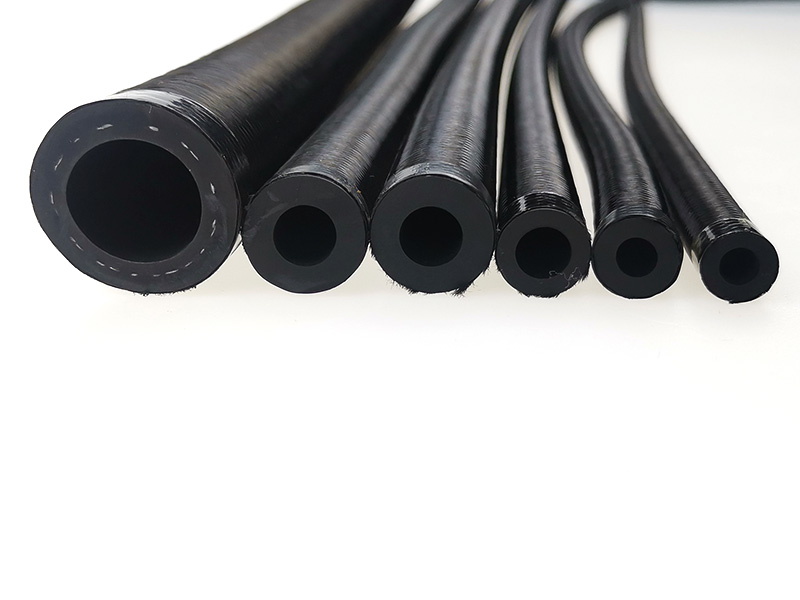
Pressure testing is to apply a certain pressure to the radiator hose to test its pressure resistance and leakage situation. During testing, it should be ensured that the air source is dry, impurity free compressed air, and the pressure is stable within the specified range. At the same time, professional testing equipment such as airtightness detectors should be used to monitor the pressure changes inside the hose in real time. If the pressure change exceeds the allowable range, it indicates that there is a problem with the pressure resistance or sealing performance of the hose, and further inspection and treatment are needed.
Durability testing is to evaluate the performance changes of radiator hoses during long-term use. During testing, various stress conditions under actual use can be simulated by repeatedly bending, twisting, and applying pressure. By comparing the performance changes before and after testing, the durability and service life of the hose can be determined. In addition, tests can be conducted under extreme conditions such as high and low temperatures to evaluate the adaptability of the hose in different environments.
Sealing performance testing is a crucial part of radiator hose inspection. Dry cleaning gas, nitrogen, or other gases can be used as testing substances to determine the sealing performance of the hose by detecting whether there is gas leakage inside. During the testing process, the accuracy and reliability of the testing equipment should be ensured to avoid misjudgment or omission. At the same time, it is also necessary to check whether the quality of the hose is symmetrical and whether there are any irregularities such as adhesive adhesion, which may affect its sealing performance.
When conducting radiator hose testing, relevant testing standards and specifications should also be followed. These standards usually include material requirements, testing methods, performance indicators, etc. of the product, which are important basis for ensuring the reliability and comparability of the test results. Common international and national standards include ISO, EN, ASTM, GB, etc. When selecting testing methods, it is necessary to choose testing methods that meet the requirements of the standards based on the actual situation and testing needs, and strictly follow the standards for operation.
In addition to following standards, the inspection of radiator hoses should also pay attention to details and comprehensiveness. For example, during the testing process, attention should be paid to observing vulnerable parts such as the connection and bending parts of the hose, which are often more prone to problems. At the same time, the installation and usage environment of the hose, as well as its compatibility with other components, should also be considered to ensure the accuracy and practicality of the test results.
The safety factor testing of radiator hoses is an important part of ensuring the safe operation of the cooling system. Through scientific and meticulous testing methods and standards, problems can be discovered and solved in a timely manner, ensuring that the quality and performance of radiator hoses meet design requirements. At the same time, strengthening quality management and control, improving the professional quality and operational skills of testing personnel, are also important factors in ensuring the quality of testing.